
Blocked Drain on Avenida Paulista? How a Desentupidora Fixes What You Already Tried
By the end of this account, you will know exactly why your plunger, your hot water and your store-bought drain opener failed on Avenida Paulista — and what a professional crew does differently. You will also see how the alternatives compare, so you can decide quickly instead of repeating the same failed attempts. This is written for the person who already tried something and is now stuck, not for someone starting from zero.
The short answer: most clogs on Avenida Paulista are not simple blockages. They sit in old shared branches, grease-packed restaurant lines or tree-rooted lateral connections, and they need mechanical cutting or high-pressure jetting rather than suction or chemicals. That is the gap between a DIY attempt and a real fix, and it is where a desentupidora Avenida Paulista earns its place.
What actually happened when the simple fixes failed
You probably started with the cheapest option: a plunger, then a bottle of caustic drain cleaner, then maybe a manual snake from the hardware store. Each one gave a few minutes of hope — water drained a little slower, then stopped again. That pattern is the first clue that the obstruction is not right at the drain mouth.
On a busy avenue like Paulista, the problem is usually further down the line. Buildings mix residential, commercial and restaurant use, so the same branch carries soap scum, coffee grounds, cooking oil and paper. Chemicals dissolve a thin channel through the grease, water flows briefly, then the grease re-seals. A plunger only moves water; it cannot pull back a solid mass that has compacted against a pipe wall.
There is also a safety issue most people underestimate. Caustic soda and similar products generate heat and can damage PVC joints, and if they sit in a blocked line they become a hazard for whoever opens the pipe later. If you already poured chemicals, tell the technician before work starts. Chemical drain openers can make a professional job more dangerous, not easier.
Why Avenida Paulista clogs behave differently from other streets
Avenida Paulista is not a typical residential street. It is a dense corridor of offices, apartments, clinics, restaurants and event venues, and the plumbing reflects that mix. Lines are long, shared between units, and often original to buildings from decades ago. When one section fails, several units notice at once.
Shared branches and older pipe materials
Many buildings here connect multiple floors or units to a single horizontal branch before reaching the main stack. A blockage in that shared branch backs up everywhere upstream. Older buildings may still have cast iron or galvanized sections that corrode and snag debris, which is why a cable machine sometimes brings back rust flakes along with grease.
Grease, roots and heavy daily use
Restaurants and coffee shops along the avenue load the network with fats and solids all day. Street trees are another factor: roots seek moisture and enter small cracks in lateral connections, then grow into a mat that catches everything passing by. Neither problem responds to suction alone.
The alternatives I compared, and where each one breaks down
When you are standing in a flooded kitchen, the options look simple: call someone, rent equipment, or wait. In practice, each route has a different failure point, and knowing them saves time.
| Option | Best for | Where it fails |
|---|---|---|
| DIY plunger or manual snake | Soft clogs near the drain | Cannot reach shared branches or cut roots |
| Chemical opener | Very light soap or hair clogs | Damages pipes, hazardous to technicians, re-clogs |
| Generic handyman | Simple sink or toilet blocks | No jetting truck or camera inspection |
| Specialist desentupidora | Shared lines, grease, roots, emergencies | Requires scheduling and access to the property |
The pattern is clear: the more the clog involves the building’s shared network, the less any household tool can do. A specialist brings mechanical cutting, high-pressure water jetting and, when needed, camera inspection to see the actual cause instead of guessing.
What a professional visit looks like, step by step
The first thing a good crew does is ask questions: where did it back up, what was poured, when did it start, and which fixtures are affected. That conversation narrows the location before any equipment is unloaded.
- Access check: locating cleanouts, inspection boxes and the building’s main connection.
- Mechanical clearing: a rotating cable or auger cuts through compacted grease and roots.
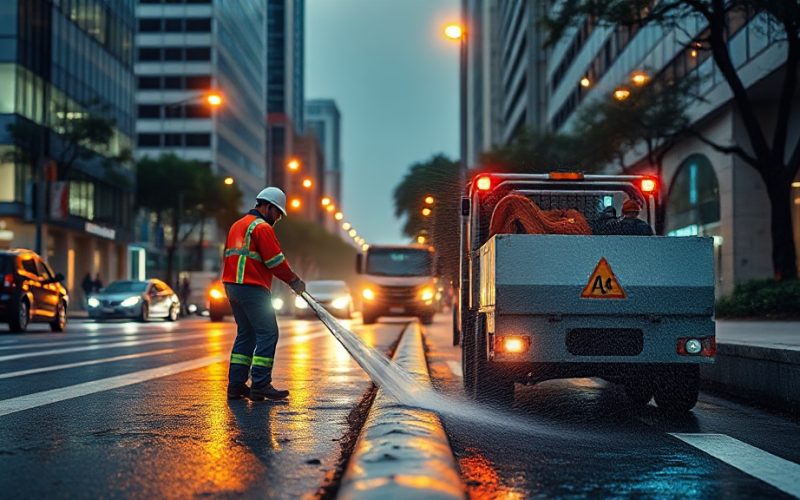
- Hydrojetting: high-pressure water scours the pipe wall, removing residue the cable leaves behind.
- Verification: running water and, if needed, a camera to confirm the line is clear and intact.
- Prevention advice: pointing out what caused the block and how to reduce repeat risk.
For a building on the avenue, this sequence matters because a partial clearing will back up again within days. The jetting step is what turns a temporary opening into a clean pipe. If you manage a condominium, ask for the verification step explicitly — it is the difference between a guess and a confirmed repair.
Emergency timing: what changes after hours
Blockages rarely announce themselves at convenient hours. A restaurant discovers a backed-up floor drain during dinner service; a clinic finds water in a treatment room before opening. On Avenida Paulista, where foot traffic and commercial activity run late, the cost of waiting is measured in lost business and damaged property, not just inconvenience.
This is why 24-hour emergency response is a practical requirement rather than a marketing line. A crew that can arrive at night prevents water from spreading into adjacent units and keeps the problem from becoming a restoration job. When comparing providers, ask two direct questions: is there real night coverage, and how long until someone is on site? A vague answer is a warning sign.
For a commercial address, the right contact is a desentupidora Avenida Paulista São Paulo SP that handles both the emergency and the follow-up, so the same team that cleared the line can advise on prevention.
Costs, trade-offs and the mistakes that repeat
Price depends on access, pipe length, the cause and the time of day. A simple sink clearing costs far less than a shared branch with root intrusion that needs jetting and camera verification. The mistake is choosing purely on the lowest quoted number: a cheap partial clearing that fails in a week costs more than a proper job done once.
Other common errors I saw while comparing options include pouring chemicals and then calling a technician without mentioning it, ignoring a slow drain until it becomes a flood, and hiring someone without the equipment to jet a line. Each of these turns a manageable clog into a bigger bill.
For property managers, the smarter trade-off is preventive maintenance: scheduled jetting of grease-heavy lines before the holiday or rainy season. It costs less than an emergency call and avoids the disruption of a backup during business hours.
Choosing the right provider without wasting another visit
Ask for a clear description of the method, not just a price. A provider that mentions mechanical clearing, hydrojetting and verification is describing a process; one that only promises to “unclog” is guessing. Confirm whether they serve commercial buildings and whether they can work outside business hours.
Check that the team is equipped for the specific problem. Grease and roots need different tools than a soft bathroom clog, and a camera inspection is the only way to confirm a pipe is intact after clearing. If the property is a condominium, confirm the provider can coordinate access with the building administration and document the service.
Finally, keep a record of what was done. A short note of the date, the line cleared and the method used helps the next technician — and helps you spot a recurring problem before it becomes an emergency. A reliable desentupidora em Avenida Paulista São Paulo SP will welcome that information rather than ignore it.
Lessons from the whole episode
The first lesson is that a clog that survives a plunger and a chemical opener is almost never a surface blockage. Stop adding products and start diagnosing. The second is that location matters: on Avenida Paulista, shared branches, restaurant grease and tree roots are the usual suspects, and each needs mechanical or high-pressure treatment.
The third is timing. Emergency coverage is worth paying for when a backup threatens a business or spreads into neighboring units. The fourth is prevention: scheduled maintenance on grease-heavy lines is cheaper than repeated emergency calls. If you remember one thing, make it this — the right fix is confirmed, not assumed, so insist on verification before the crew leaves.
With those points in hand, you can move from failed attempts to a clear decision: describe the symptoms, ask about method and timing, and choose a provider that can actually reach the cause of the blockage.
